Give us liberty AND give us death
Teachers

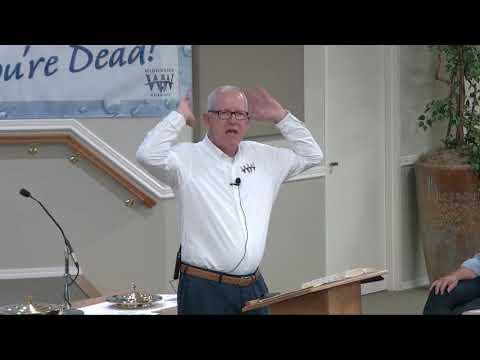


Lesson Summary
The teacher opened the class by reflecting on Patrick Henry's famous "Give me liberty or give me death" speech delivered on March 23, 1775, which proved to be a pivotal moment in American history by motivating Virginia's leadership to commit troops to the Revolutionary War. However, the teacher pivoted to emphasize that while this speech represents a significant historical turning point, it pales in comparison to the world-changing event of Jesus Christ's crucifixion outside Jerusalem. The central theme of the lesson drew from Romans chapter 6, where Paul addresses the reality that many Christians still feel trapped by sin and defeated in their spiritual lives, despite having been liberated by Christ's sacrifice. The teacher emphasized that Paul uses the word "know" in Romans 6:6 in a way that means to know by personal experience—something believers can grasp and have confidence in. The lesson focused on Romans 6:6-7, where Paul teaches that believers' old selves were crucified with Christ so that the body of sin might be rendered powerless, and those who have died have been set free from sin. A critical point the teacher made was that becoming a Christian is not merely a decision or lifestyle choice, but rather a fundamental call to die—to give up who we are and surrender completely to Christ. This radical transformation is what enables Christians to claim true liberty from the power of sin and to experience genuine freedom in their relationship with God.
Key Scriptures
We know that our old self was crucified with him so that the body of sin might be brought to nothing, so that we would no longer be enslaved to sin. For one who has died has been set free from sin.