Thoughts about Death
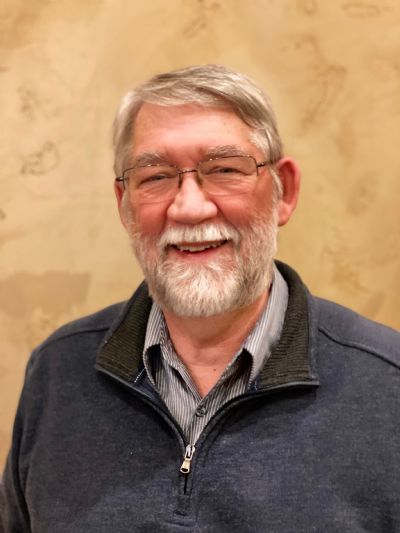
Teacher
Lesson Summary
The class began by reaffirming the confidence Christians can have in the face of death because Jesus, the Good Shepherd, walks with them even through the "valley of the shadow of death." Charles White used the train‑station analogy to illustrate that all believers will eventually board the divine train to the same destination, though at different times, and emphasized the promise that "after death comes life." He reviewed various ancient terms for the afterlife—Sheol, Hades, Gehenna, Abaddon, the abyss, Tartarus, and the bosom of Abraham—citing the parable of the rich man and Lazarus to show the biblical distinction between places of comfort and punishment. The discussion then turned to the doctrine of purgatory, noting its medieval origins and lack of biblical support. White highlighted Hebrews 1:3 and the New Testament language of purification, explaining that forgiveness and cleansing come solely through Christ’s sacrifice, not through personal suffering or prayers for a post‑mortem purgation. He reinforced Paul’s teaching in 2 Corinthians 5:8 that believers either remain in the body or are immediately "with the Lord," leaving no scriptural basis for an intermediate state. The class concluded with prayer, reaffirming reliance on God’s promises regarding eternal life and judgment.
Key Scriptures
And there was a certain rich man, which was clothed in purple and fine linen, and fared sumptuously every day: And there was a certain beggar named Lazarus, which was laid at the gate of the same, full of sores, and desirous to be fed with the crumbs that fell from the rich man's table: and even the dogs came and licked his sores. And it came to pass, that the beggar died, and was carried by the angels into Abraham's bosom: the rich man also died, and was buried; and in hell he cried, and said, Father Abraham, have mercy on me, and send Lazarus, that he may dip the tip of his finger in water, and cool my tongue; for I am tormented in this flame. But Abraham said, Son, remember that thou in thy lifetime received good things, and Lazarus evil things: but now he is comforted, and thou art in anguish. And besides all this, between us and you there is a great gulf fixed: so that they which would pass from hence to you cannot; neither can they pass from thence to us. Then he cried, and said, Father Abraham, send Lazarus, that he may testify unto my brothers, lest they also come into this place. And Abraham said unto him, They have Moses and the prophets; let them hear them. And he said, Nay, father Abraham, but if one went unto them from the dead, they would repent. And he said unto him, If they hear not Moses and the prophets, neither will they be persuaded, though one rose from the dead.
Being confident of this, that he which began a good work in you will perform it until the day of Jesus Christ: For I am persuaded, that neither death, nor life, nor angels, nor principalities, nor powers, nor things present, nor things to come, nor height, nor depth, nor any other created thing, shall be able to separate us from the love of God, which is in Christ Jesus our Lord. For I reckon that the sufferings of this present time are not worthy to be compared with the glory which shall be revealed in us. For the creation waits eagerly for the sons of God to be revealed. For the creation was subjected to futility, not willingly, but because of him who subjected it, in hope that the creation itself will be set free from its bondage to decay and obtain the freedom of the glory of the children of God. For we know that all things work together for good, for those who love God, who are called according to his purpose.